



Antibody Storage Guidelines: Temperature, Aliquoting, and Shelf Life
Protect your antibody investment with proper storage practices. Learn optimal temperatures, aliquoting strategies, and how to maximize shelf life for every antibody type.
AbTrove Team
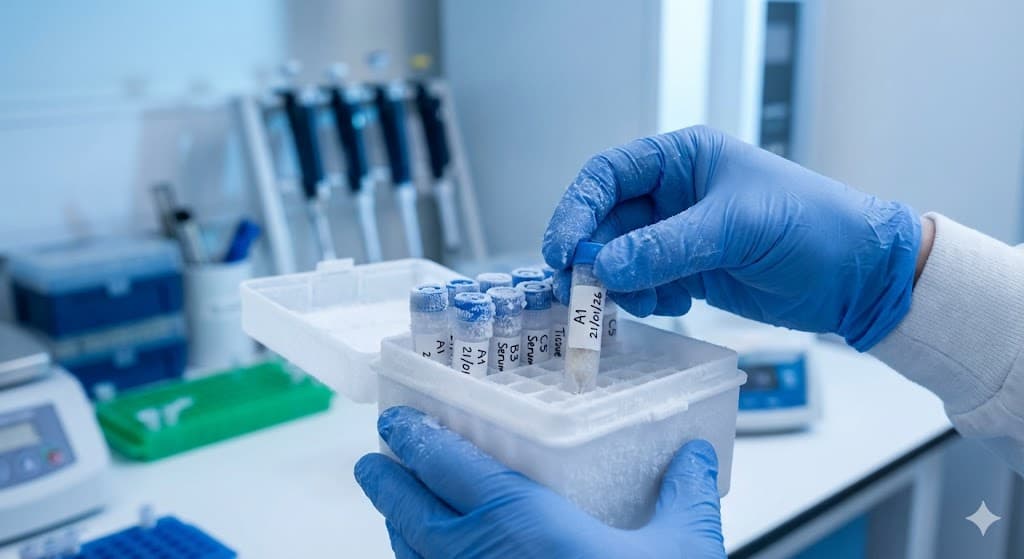
You purchased a $450 antibody, validated it beautifully, and published three papers using it. Six months later, the same lot produces nothing but background noise. What happened?
Improper storage. It's the silent killer of antibody performance, turning expensive reagents into expensive waste. Following proper antibody storage guidelines isn't difficult, but the details matter. Here's everything you need to know to protect your investment.
Why Antibody Storage Matters
Antibodies are proteins. Like all proteins, they're susceptible to degradation through:
- Denaturation from temperature fluctuations
- Aggregation from repeated freeze-thaw cycles
- Proteolytic degradation from contaminating proteases
- Oxidation of critical residues
- Microbial contamination in improperly handled solutions
A degraded antibody doesn't always fail completely—it might produce increased background, reduced signal, or inconsistent results between experiments. These subtle failures are harder to troubleshoot than complete failure.
The good news: proper storage can maintain antibody activity for years.
Temperature Requirements by Antibody Type
Different antibody formats have different storage needs.
Lyophilized (Freeze-Dried) Antibodies
Storage: Room temperature to 4°C before reconstitution
Shelf life: 1-5 years (check manufacturer's expiration date)
Lyophilized antibodies are the most stable format. The removal of water dramatically slows degradation reactions. Many can be stored at room temperature, though 4°C extends stability.
After reconstitution: Treat as liquid antibodies (see below). The clock starts ticking once you add buffer.
Pro Tip: Reconstitute lyophilized antibodies in sterile conditions. Immediate aliquoting after reconstitution maximizes long-term stability.
Liquid Antibodies at Working Concentration
Short-term storage (1-2 weeks): 4°C
Long-term storage: -20°C or -80°C
Most liquid antibodies arrive at 0.5-1.0 mg/mL in buffer containing stabilizers (BSA, glycerol, sodium azide). For immediate use, 4°C storage is fine. For anything beyond a couple weeks, freeze them.
Critical: Check what's in the buffer.
- Glycerol-containing antibodies can be stored at -20°C without aliquoting (they won't freeze solid)
- Non-glycerol antibodies should be aliquotted and go to -20°C or -80°C if you want to avoid freeze-thaw damage
Conjugated Antibodies (Fluorophore, HRP, Biotin)
Storage: 4°C in the dark, or -20°C protected from light
Shelf life: Generally shorter than unconjugated—6 months to 2 years
Conjugated antibodies are more sensitive to degradation. Fluorophores can photobleach. Enzyme conjugates can lose activity.
Special considerations:
- Always store in amber tubes or wrapped in foil
- Avoid repeated freeze-thaw cycles even more strictly than unconjugated antibodies
- Some tandem dyes (PE-Cy7, APC-Cy7) are particularly sensitive to light and temperature
Ascites and Serum-Derived Antibodies
Storage: -20°C or -80°C
Shelf life: Years when properly stored
These crude preparations are remarkably stable due to the presence of other serum proteins that act as stabilizers. They're also more tolerant of freeze-thaw cycles than purified antibodies.
The Aliquoting Decision: When and How
The question every lab debates: to aliquot or not to aliquot?
When to Aliquot
Aliquot your antibody if:
- It will be used over many months (>6 freeze-thaw cycles likely)
- It doesn't contain glycerol (will freeze solid)
- It's particularly expensive and you want to minimize risk
- Multiple lab members will access it (increases handling variation)
- You're working with enzyme conjugates or sensitive fluorophores
When Aliquoting Is Unnecessary
Skip aliquoting if:
- The antibody contains >50% glycerol (won't freeze solid at -20°C)
- You'll use the entire vial within 2-3 months
- The manufacturer specifically recommends against it
- Working with large volumes where small aliquots are impractical
How to Aliquot Properly
When you do aliquot, technique matters:
- Calculate aliquot size based on typical experiment usage. If you use 5 µL per Western blot and run 4 blots per experiment, 25-30 µL aliquots make sense.
- Use appropriate tubes. Protein adsorption to tube walls is real. Low-bind tubes help for dilute antibodies. Polypropylene is standard; avoid polystyrene.
- Work quickly on ice. Don't leave antibodies at room temperature longer than necessary during aliquoting.
- Label everything. Include: antibody name, lot number, concentration, date, your initials. Future you will thank present you.
Pro Tip: Leave the last 10-20% in the original tube as a "master stock" in case you need to verify concentration or identity later.
The Freeze-Thaw Problem
Repeated freeze-thaw cycles damage antibodies through:
- Ice crystal formation that can physically disrupt protein structure
- Concentration effects as water freezes and solutes concentrate
- Surface adsorption as proteins contact air-liquid interfaces
How Much Damage Per Cycle?
This varies enormously by antibody and buffer composition. Some antibodies tolerate 10+ cycles with minimal activity loss. Others show significant degradation after 2-3 cycles.
General guidelines:
- Most antibodies tolerate 3-5 freeze-thaw cycles without major issues
- Beyond 5 cycles, expect gradual activity decline
- Enzyme conjugates are less tolerant than unconjugated antibodies
- Glycerol and other cryoprotectants help
Minimizing Freeze-Thaw Damage
- Aliquot so each tube is thawed only once or twice
- Thaw on ice not at room temperature—slower thawing is gentler
- Never thaw in warm water or a 37°C bath unless protocol specifically requires it
- Don't refreeze partially used aliquots at -80°C; store at 4°C if you'll use within a week
Expiration Dates: Guidelines vs. Reality
Manufacturer expiration dates are conservative estimates based on stability testing. In practice:
What Expiration Dates Mean
Most companies guarantee performance through the expiration date when stored as directed. This doesn't mean the antibody instantly becomes useless the day after.
Extending Antibody Life
With proper storage, many antibodies remain functional well beyond labeled expiration:
- Lyophilized antibodies: Often stable for years beyond expiration
- Frozen antibodies at -80°C: Frequently usable 1-2 years post-expiration
- Conjugated antibodies: More likely to degrade as expected
Testing Expired Antibodies
Before discarding expired stock:
- Run alongside a known working positive control
- Compare to a fresh lot if available
- Check for aggregation (cloudiness, precipitate)
- If activity is reduced, you might still use at higher concentration for non-critical applications
When to Discard
Throw out antibodies that show:
- Visible precipitate or cloudiness
- Color change in conjugated antibodies
- Failed positive controls in validation experiments
- Inconsistent results between replicates
Storage Location Organization
Proper storage isn't just about temperature—it's about finding your antibodies when you need them.
Freezer Organization Principles
- Consistent labeling on all tubes and boxes
- Designated locations for different antibody types or applications
- Visual freezer maps showing what's where
- Regular audits to remove expired or unused stock
Avoiding Common Disasters
The defrosted freezer: Keep a log of freezer temperature or install an alarm system. A single overnight defrost can ruin years of antibody collection.
The vanishing antibody: Without location tracking, antibodies get "lost" in freezers for months. Visual maps and inventory software solve this.
The mystery tube: Unlabeled or illegibly labeled tubes are effectively useless. Establish labeling standards and enforce them.
Tracking Storage Conditions with AbTrove
Keeping track of storage locations, freeze-thaw cycles, and expiration dates across dozens of antibodies gets complicated fast. AbTrove simplifies this with:
- Visual freezer maps showing exact antibody locations
- Stock tracking for aliquots and remaining volumes
- Expiration alerts before antibodies age out
- Storage notes for special handling requirements
- Lab-wide visibility so everyone knows where to find (and return) antibodies
Instead of hunting through freezers or decoding confusing spreadsheets, researchers can locate any antibody in seconds.
Organize Your Antibody Storage with AbTrove
Visual freezer maps and stock tracking for every antibody in your lab
Start Free Today →Quick Reference: Storage Cheat Sheet
| Antibody Type | Short-term | Long-term | Aliquot? |
|---|---|---|---|
| Lyophilized | RT or 4°C | RT or 4°C | N/A |
| Liquid (with glycerol) | 4°C | -20°C | Optional |
| Liquid (no glycerol) | 4°C | -80°C | Yes |
| Fluorophore conjugates | 4°C dark | -20°C dark | Yes |
| Enzyme conjugates | 4°C | -20°C | Yes |
| Ascites/Serum | 4°C | -20°C/-80°C | Optional |
Conclusion: Protect Your Investment
Antibodies are among the largest consumable expenses in most research labs. Proper storage protects that investment and ensures reproducible results experiment after experiment.
Key takeaways:
- Match storage temperature to antibody type and manufacturer recommendations
- Aliquot strategically to avoid unnecessary freeze-thaw cycles
- Glycerol-containing antibodies are more forgiving of -20°C storage
- Protect conjugated antibodies from light
- Track locations and expiration dates systematically
- When in doubt, test before discarding expired stock
The few minutes spent on proper storage save hours of troubleshooting failed experiments—and thousands of dollars in prematurely degraded reagents.
Need help organizing your antibody storage? Try AbTrove free and see how visual freezer maps transform your lab's organization.